
Tucson Monsoon Roof Prep: A Simple Checklist Before Storm Season

Updated: Feb 17
Why Monsoon Prep Matters in Tucson
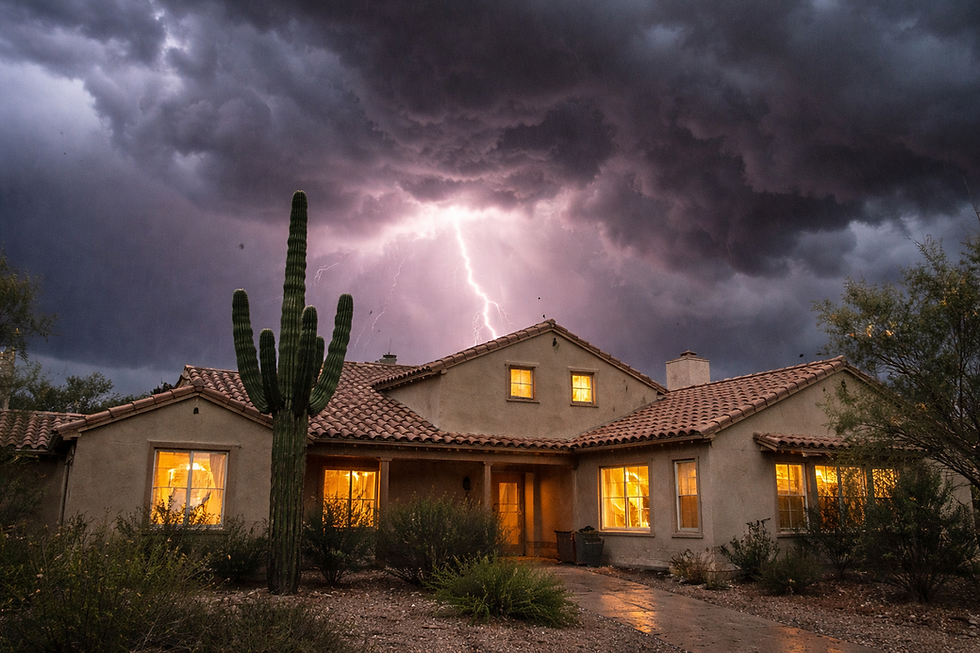
Monsoon season in Tucson brings sudden downpours, high winds, dust storms, and rapid pressure changes. Even a roof that “looks fine” can fail under intense summer storms.
Most emergency roof calls during monsoon season happen because:
Small problems were already present
Debris blocked drainage
Flashing was loose or deteriorated
Previous repairs were aging
The good news? A simple pre-monsoon checklist can prevent most mid-season surprises.
The Tucson Monsoon Roof Prep Checklist
Use this checklist in late spring or early summer before storm activity ramps up.
1. Clear All Roof Debris
Remove:
Leaves and palm fronds
Dirt buildup
Branches
Wind-blown debris
Debris traps moisture and can redirect water under tiles, shingles, or membranes.
Flat and foam roofs are especially vulnerable to drainage blockages. If you're unsure about what kind of roof you have, you can learn about it here:
Common Tucson Roof Types: Tile, Shingle, Flat, Foam, and Metal
2. Clean and Test Drainage Systems
For sloped roofs:
Clear gutters and downspouts
Make sure water flows freely
For flat roofs:
Check scuppers
Inspect roof drains
Look for signs of ponding
Standing water weakens roofing materials and increases leak risk.
3. Inspect Flashing Areas
Flashing is the most common failure point.
Check around:
Chimneys
Skylights
Roof-to-wall transitions
Valleys
Vents and penetrations
Look for:
Lifting edges
Cracked sealant
Rust or separation
If you see deterioration, schedule repairs before storms hit.
4. Check Tiles or Shingles for Movement
Monsoon winds can exceed 50+ mph.
Inspect for:
Cracked or slipped tiles
Curling or lifted shingles
Exposed underlayment
Loose ridge caps
Even one displaced section can allow wind-driven rain inside.
5. Examine Foam or Flat Roof Coatings
If you have a foam or coated flat roof:
Look for cracks
Check for exposed foam
Identify blistering
Inspect seam areas
UV damage during Arizona summers can weaken coatings before monsoon arrives.
6. Trim Overhanging Trees
Branches scraping against your roof can:
Damage tiles or shingles
Remove granules
Clog drains
Break during storms
Trim limbs back to reduce impact and debris accumulation.
7. Check Interior Ceilings and Attic
Before storms begin:
Look for faint ceiling stains
Inspect attic decking for discoloration
Check for musty smells
Small pre-existing leaks often show subtle signs before major storms expose them.
8. Schedule a Professional Tucson Roof Inspection
Even if everything “looks okay,” hidden issues may exist.
Professional inspections:
Catch small flashing failures
Identify aging underlayment
Detect soft decking areas
Evaluate previous repair work
Monsoon prep inspections are far less expensive than emergency leak repairs during storm season.
When to Schedule Monsoon Roof Prep in Tucson
The best time: May through early June
Waiting until storms are forecast often means:
Limited contractor availability
Emergency pricing
Preventable interior damage
Planning early ensures your roof is ready before the first major storm hits southern Arizona.
Signs You Should Not Wait
Schedule an inspection immediately if you notice:
Previous leak repairs
Sagging areas
Repeated minor leaks
Aging roof (15+ years depending on material)
Loose or missing components
You should act quickly if you have noticed anything out of the ordinary prior to monsoon season to prevent major cost of repairs.
Start here:
Roof Repair
Roof Replacement
Roofing FAQs
Protect Your Home Before the Storms Arrive
Monsoon storms are predictable. Roof damage is preventable.
A simple inspection and basic prep steps now can save:
Interior drywall
Insulation
Electrical systems
Flooring
Insurance headaches
If you want peace of mind before monsoon season in Tucson, schedule a roof inspection with Paramount Roofing and Design.


Comments